
If you're planning a kitchen renovation, don’t overlook the one feature that impacts everything from air quality to appliance placement: the range hood.
A statement range hood has become a defining feature in modern kitchen design. Beyond its visual appeal, it's also a key player in creating a well-functioning, healthy cooking environment. Yet, it's still surprisingly common to see a microwave oven with a built-in return-air (ductless) vent installed above the range or a cooktop. The problem? Ductless vents simply don’t perform like true ducted hoods—and they come with additional drawbacks. One of the most common questions I get is: “Do I really need a vented range hood, or will a ductless one do?” Let’s explore both options—how they work, what they offer, and why this choice matters more than you might think.

A custom wood hood cover by Crystal Cabinet Works with a vented range hood inset.
What Is a Vented (Ducted) Range Hood?
A vented range hood (also called a ducted hood) connects to ductwork that routes cooking exhaust—heat, moisture, grease, odors, and airborne particles—outside of the home.
Key Features:
A fan pulls the air through a filter and pushes it outdoors through a dedicated duct.
Can be wall-mounted, ceiling mounted (over an island), built into a cabinet, or a decorative hood cover.
Requires planning during design and construction to accommodate the ductwork.
Benefits:
Superior air quality: It removes contaminants completely instead of recirculating them.
Moisture and odor control: Especially important if you cook often or use gas.
Protects cabinetry and finishes: Keeps grease from building up over time.
Supports a healthy home: Essential in wellness-focused and energy-efficient design.

A wall mounted stainless steel vented range hood. Metal cabinets by IMDesign.
What Is a Ductless (Return Air) Range Hood?
A ductless range hood doesn’t vent outside. Instead, it pulls air through a charcoal or carbon filter and pushes it back into the kitchen. These are often found as microwave-hood combos installed over the cooktop.
Key Features:
Recirculates filtered air back into the room.
Typically comes as part of an over-the-range microwave.
Easier and cheaper to install—no ductwork required.
Drawbacks (Let’s be honest here):
Limited effectiveness: Filters catch some odors and grease but do not remove heat or moisture.
Higher maintenance: Filters need frequent replacing and can lose effectiveness quickly.
Placement issues: Over-the-range microwaves often sit too high for safe, ergonomic use—especially for kids or not tall adults.
Aesthetic limitations: Visually bulky and not ideal for a high-end or custom kitchen design.
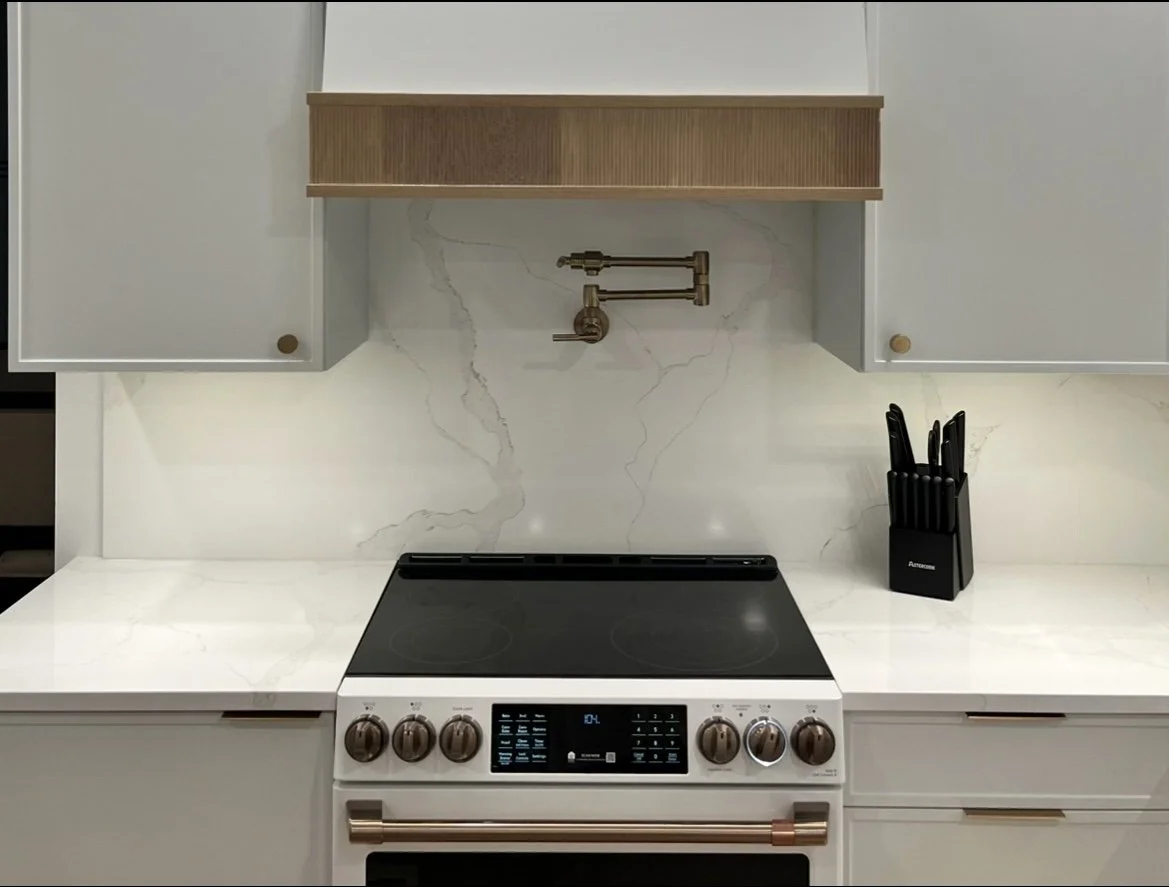
Custom wood hood cover with a ducted hood insert.

So, What Do I Recommend?
You guessed it—vented, always.
As a kitchen designer who focuses on health, functionality, and long-term value, I never recommend a ductless range hood to my clients. I understand the appeal of all-in-one microwave combos, but the truth is they’re not practical for real-life cooking and don’t meet the ventilation needs of a modern kitchen. Worse, they’re often installed too high to safely reach hot dishes—especially for shorter people and children.
If you're investing in a kitchen remodel, it’s worth doing it right. Proper ventilation doesn’t just support a better cooking experience—it contributes to the longevity of your finishes, the comfort of your home, and even your health.
Final Thoughts
Ventilation might be behind the scenes, but it’s a cornerstone of thoughtful kitchen design. Whether you're planning a full renovation or just upgrading appliances, don't settle for less when it comes to your range hood. It’s one of those “small” decisions that can make a huge impact.