
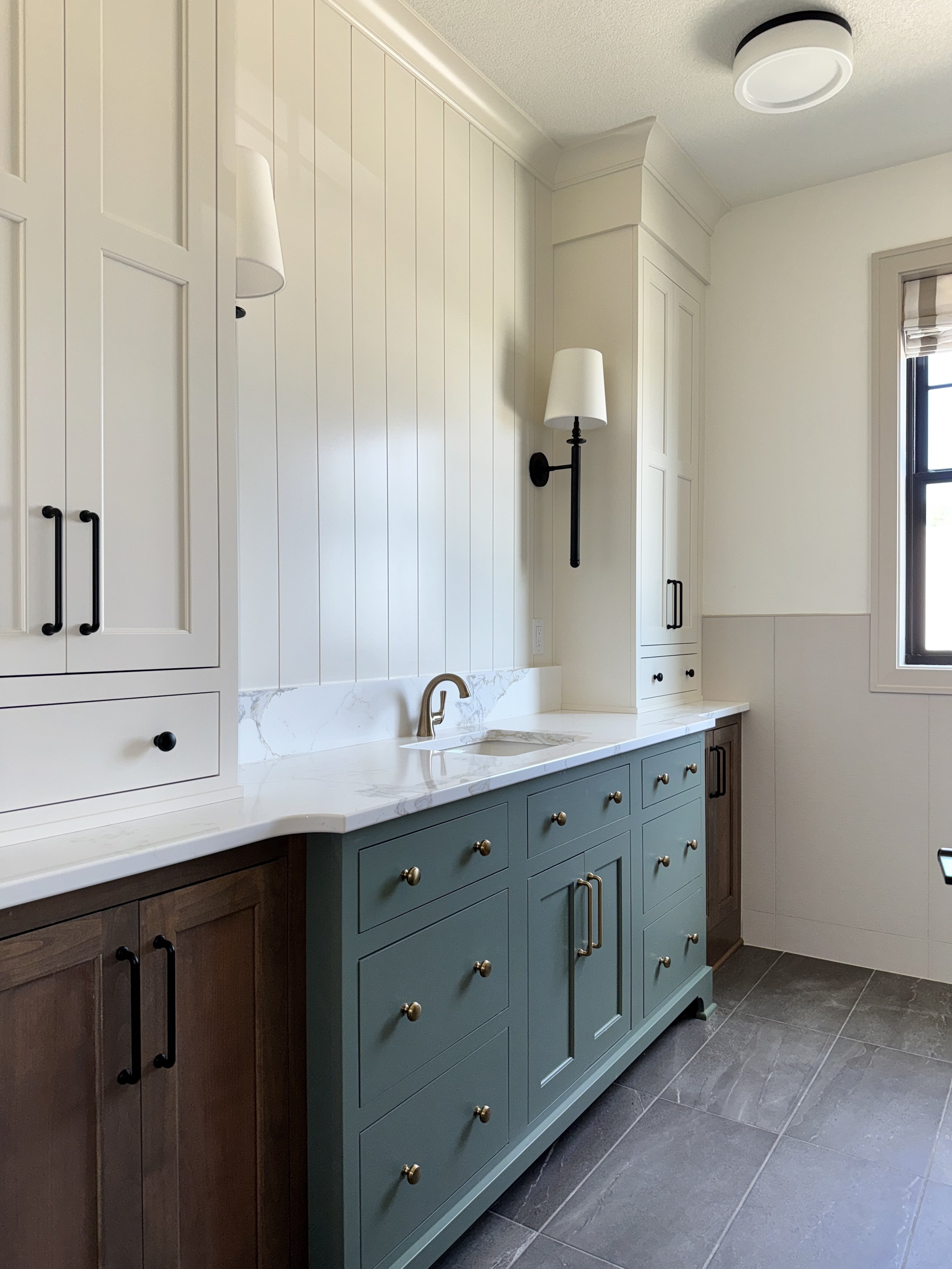
Primary bathroom single sink vanity. This image was taken before the mirror and accessories were added.
Designing a Bathroom That Grows With You
When planning a forever home, the bathroom deserves special attention. It’s one of the most-used spaces in the house—and one of the most important to get right, especially if the goal is to stay in your home long-term.
That’s where the idea of aging in place comes in. Simply put, aging in place means designing your home so that you can live in it comfortably, safely, and independently as you get older—without needing to move or remodel later on.
For this project, we worked with a couple who were planning their next chapter—one that includes staying in their home for many years to come. The challenge? Create a primary bathroom that’s both beautiful and highly functional, now and in the future.
1. A Smarter Vanity Setup
Instead of the typical double-sink vanity, we went with a single sink—and it was a strategic choice. Not only does it free up more usable counter space, but it also leaves room to modify the vanity for wheelchair access in the future, if ever needed. With two sinks, that flexibility—and much of the storage—would’ve been lost.
We chose a single-lever faucet for the vanity—a small detail with big impact. Unlike twist knobs, a single-handle lever is easier to operate with one hand, minimal grip strength, or limited mobility. It’s a smart, subtle choice that makes the space more comfortable and accessible for all ages and abilities.
We didn’t skimp on organization either. Drawer banks on each end provide separate “his and hers” storage, and the base cabinets with doors plus counter-height wall cabinets with adjustable shelves make it easy to store everything from toiletries to medications right where they’re needed.
Above the sink, we will be installing a large mirror flanked by wall sconces to provide flattering, focused task lighting for grooming and daily routines.
2. Layered Lighting for Function and Comfort
As we age, good lighting becomes essential—and this bathroom delivers. We layered multiple sources for both ambient and task light:
Flushmount ceiling lights for general illumination;
Recessed lighting and a vent fan in the shower;
Sconces flanking the vanity mirror on eye level for clear, shadow-free visibility;
A wall sconce above the toilet for safe nighttime us;
Every task—from shaving to cleaning—is easier (and safer) with proper lighting.
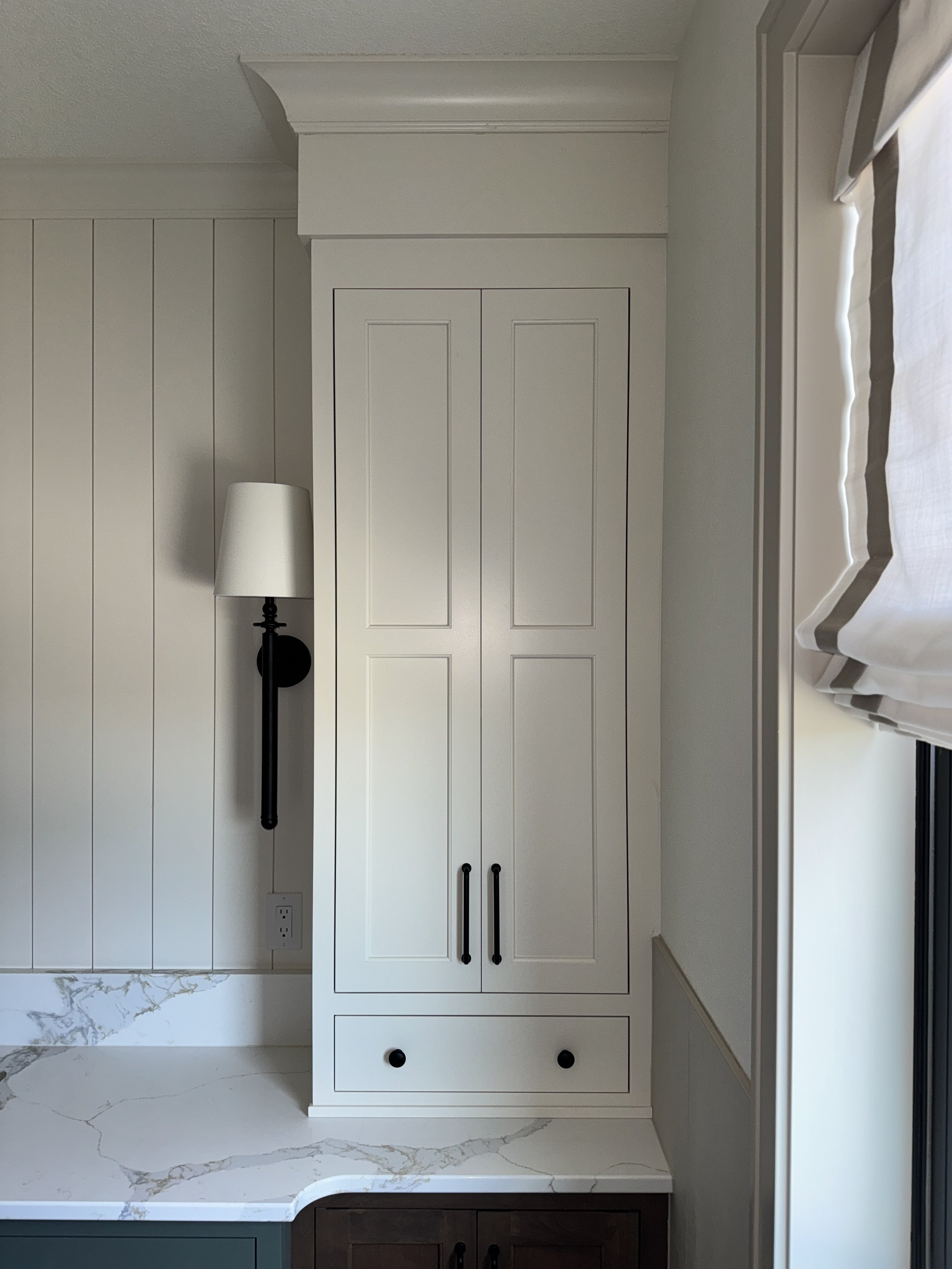
His and hers counter-height wall cabinets with a bottom drawer provide functional storage on each side of the vanity.
3. A Curbless Shower That Checks Every Box
The large, curbless shower is the real workhorse of this bathroom. With no threshold to step over, it’s easy to access now and accommodates future mobility aids without needing a remodel down the road.
We included:
A bench for safe, seated showering;
A pony wall with a horizontal grab bar and glass partition for extra support and an open feel;
A vertical grab bar with an adjustable sliding hand shower across from the bench — a great multi-purpose fixture for seated use, rinsing legs, cleaning the shower, or washing pets.
To enhance the spa-like experience, the shower includes three water sources: a wall-mounted shower head, a ceiling-mounted rainhead, and the handheld sprayer by the bench.
The glass door and partition keep the space visually open while helping contain water.
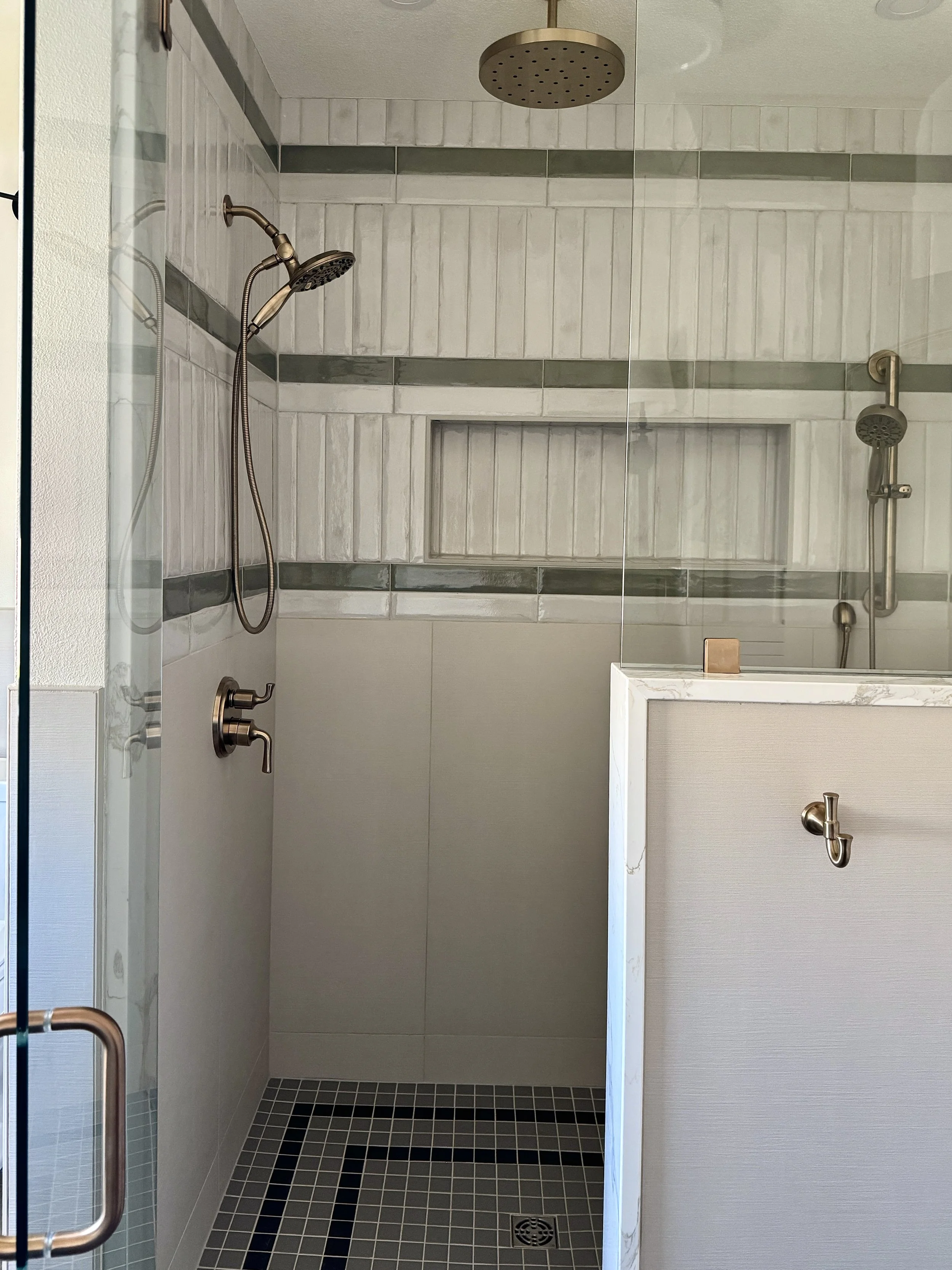
Walk-in shower with mixed tiles and brass plumbing fixtures.
4. Low-Maintenance, High-Impact Materials
Let’s talk tile. The floors are done in 12"x24" stone textured porcelain—durable, slip-resistant, and easy to clean. Around the room, we installed 48"x24" also porcelain wall tile as wainscoting for a high-end look with fewer grout lines (and less scrubbing, hallelujah).
In the shower, we got creative with texture and pattern:
The bench, pony wall cap, and shower edge are all finished with matching quartz slab used on the vanity—creating visual continuity and minimizing water damage over time.
A fun two-tone tile pattern adds visual interest above the main wall tile band.
The mosaic shower floor tile offers extra grip thanks to smaller pieces and more grout lines—form and function, baby.
A glass partition and door keeps the shower feeling open and airy while containing water splash.
5. Discreet Safety Prep
Not all aging-in-place features need to be visible from day one. In this bathroom, we reinforced the walls near the toilet area with hidden blocking, so grab bars can be added later without opening up the drywall. It’s a small investment now that avoids a big headache later.
Final Thoughts: Plan Ahead, Live Well
Designing for aging in place isn’t about giving up beauty or comfort—it’s about creating a space that works smarter over time. With the right layout, materials, and a few future-proofing strategies, your bathroom can support a lifetime of living well.
If you’re dreaming of a home that grows with you, we’d love to help you design it.