
Most well-designed homes are likely to have one common element: natural wood. The warmth and texture of wood has a timeless appeal that adds depth, character, and a comforting sense of connection to the earth. It is no wonder that it’s one of the favorite materials used in building and decorating throughout the world. In the days past before the global shipping gained traction, wood was sourced locally just like the other materials, which limited the number of wood species available in any given area. Now we have access to many more options, including the infinite number of stain colors which raises two main questions: What tone of wood to choose? And is it appropriate to mix different wood tones in one space?
The answer to the first question highly depends on the personal preference and style; functional aspects of the space; the budget, although it is possible to achieve the look of a higher priced wood with the right stain; and unfortunately, trends (don’t get me started on this one because it may turn into an entirely different blog post). In this post I want to address the topic of mixing wood finishes as I am asked about this quite often. Is it possible to mix and match without your home looking like a garage sale? Hell, yesss! But there is a method to this madness.
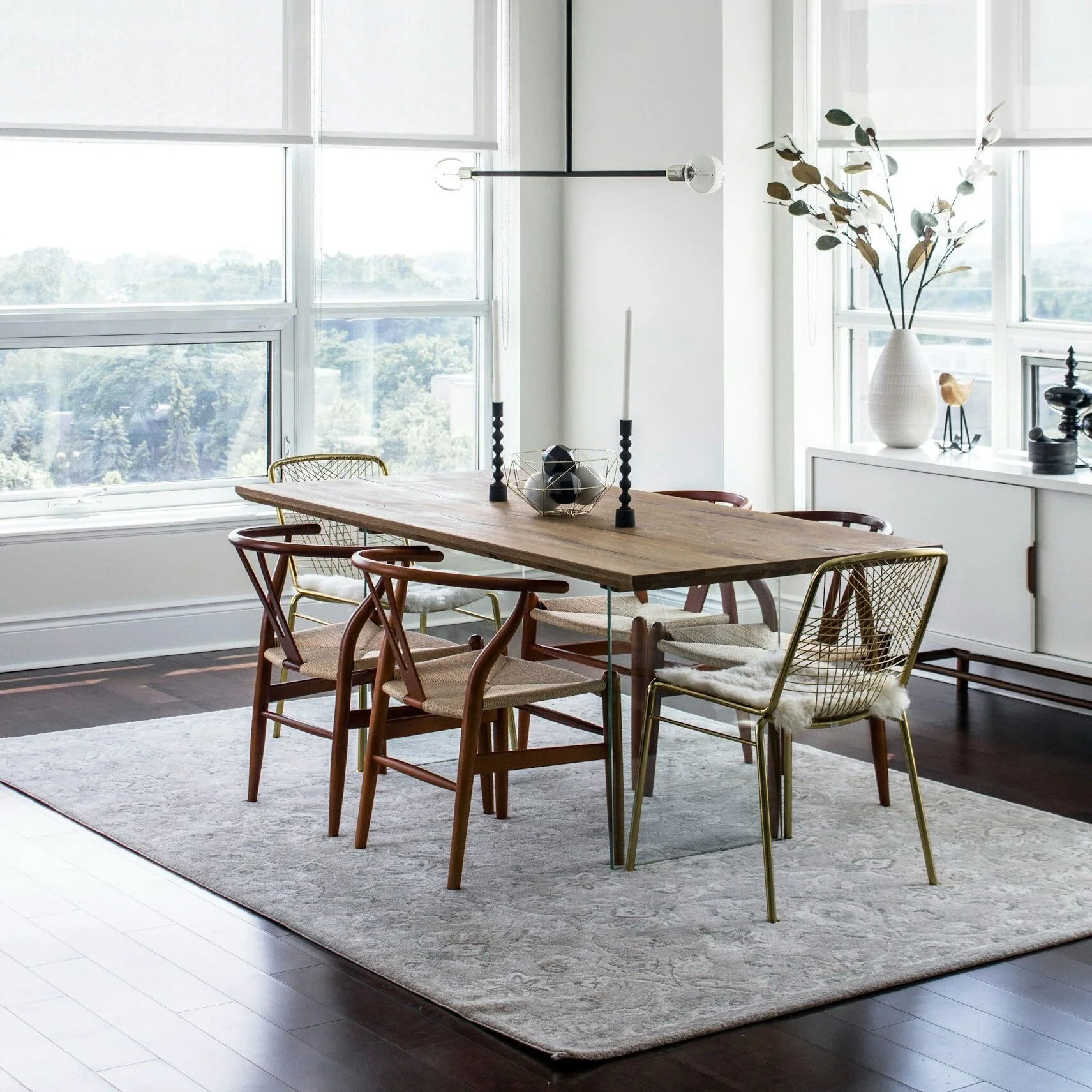
This modern dining room features white oak dining table with natural walnut wishbone chairs atop of chocolate brown walnut floor plank.
Understanding Wood Tones:
Before diving into the Mariana Trench, it's essential to understand the concept of wood tones. Wood tones refer to the color and undertones present in different wood finishes. Some woods lean towards warm tones, with hints of red or yellow, while others exude cooler hues, such as gray, taupe, and even green. By identifying the predominant tones in each wood finish, we can begin to create a cohesive palette..
Embracing Contrast:
Contrary to popular belief, mixing wood finishes doesn't mean everything has to match perfectly. In fact, embracing contrast can add depth and visual interest to the design. I like to experiment with pairing light and dark wood finishes to create dynamic focal points within a room. The key is to maintain a sense of balance by distributing different wood tones throughout the space.
Creating Continuity:
While contrast is essential, creating continuity is equally important when mixing wood finishes. To achieve a cohesive look, I aim to repeat certain wood tones or finishes throughout the space. This repetition establishes a sense of rhythm and connection, tying the room together seamlessly.
Layering Textures:
It is also important to layer the textures to add depth and dimension to the design. Juxtaposing smooth and brushed finishes, or cathedral and straight grain patterns for example sparks curiosity and creates a curated look.
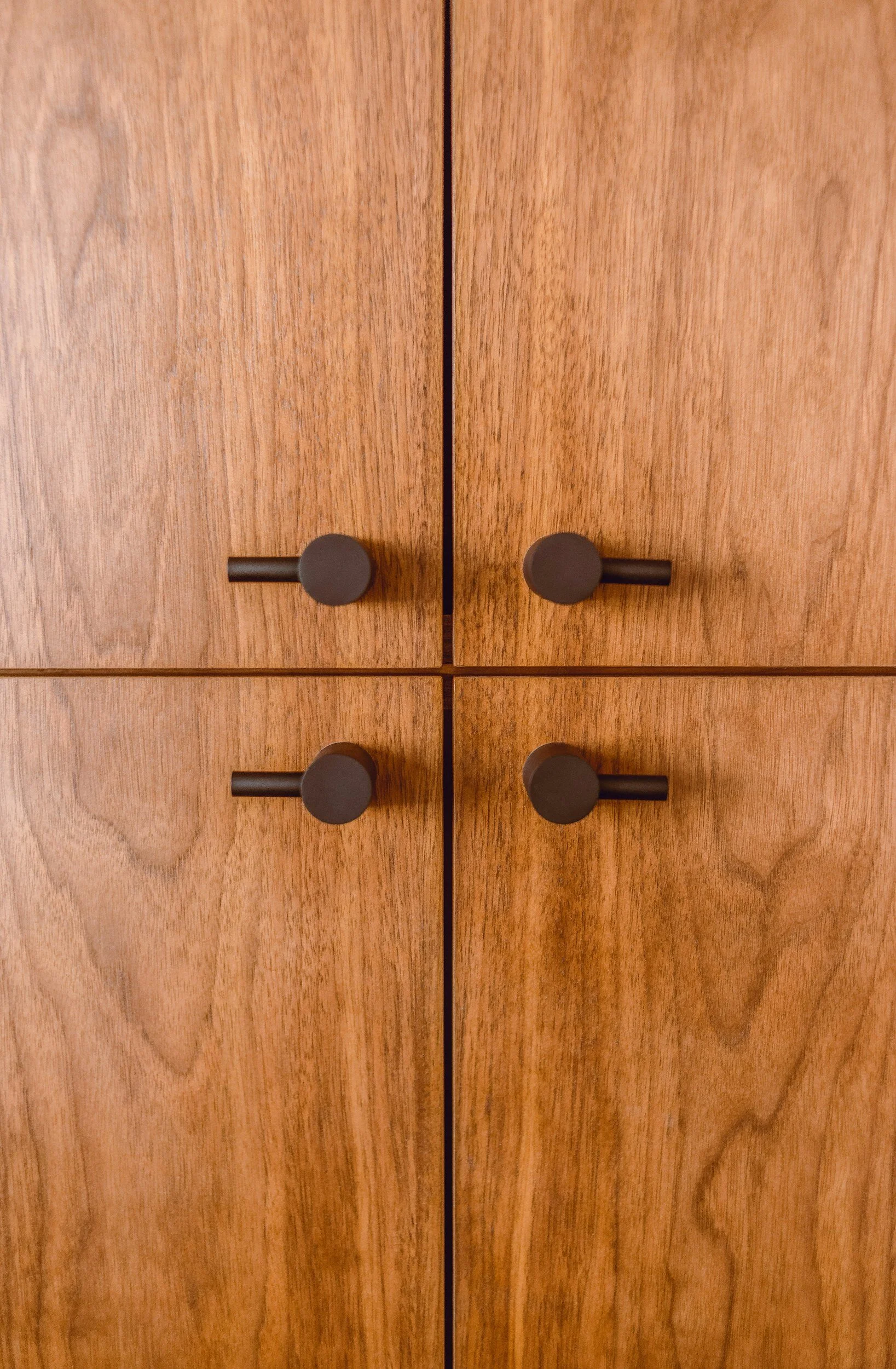
Cabinet doors in plain sawn red oak with cathedral grain.
The way I see it, mixing wood tones is no different than combining other finishes and materials on the palette like paint colors or stone. It is all about finding commonalities and artfully playing off the differences between them to achieve a balanced feel. Ultimately, the key to successful wood mixing lies in trusting your instincts and embracing your personal style. Dare to be different!