
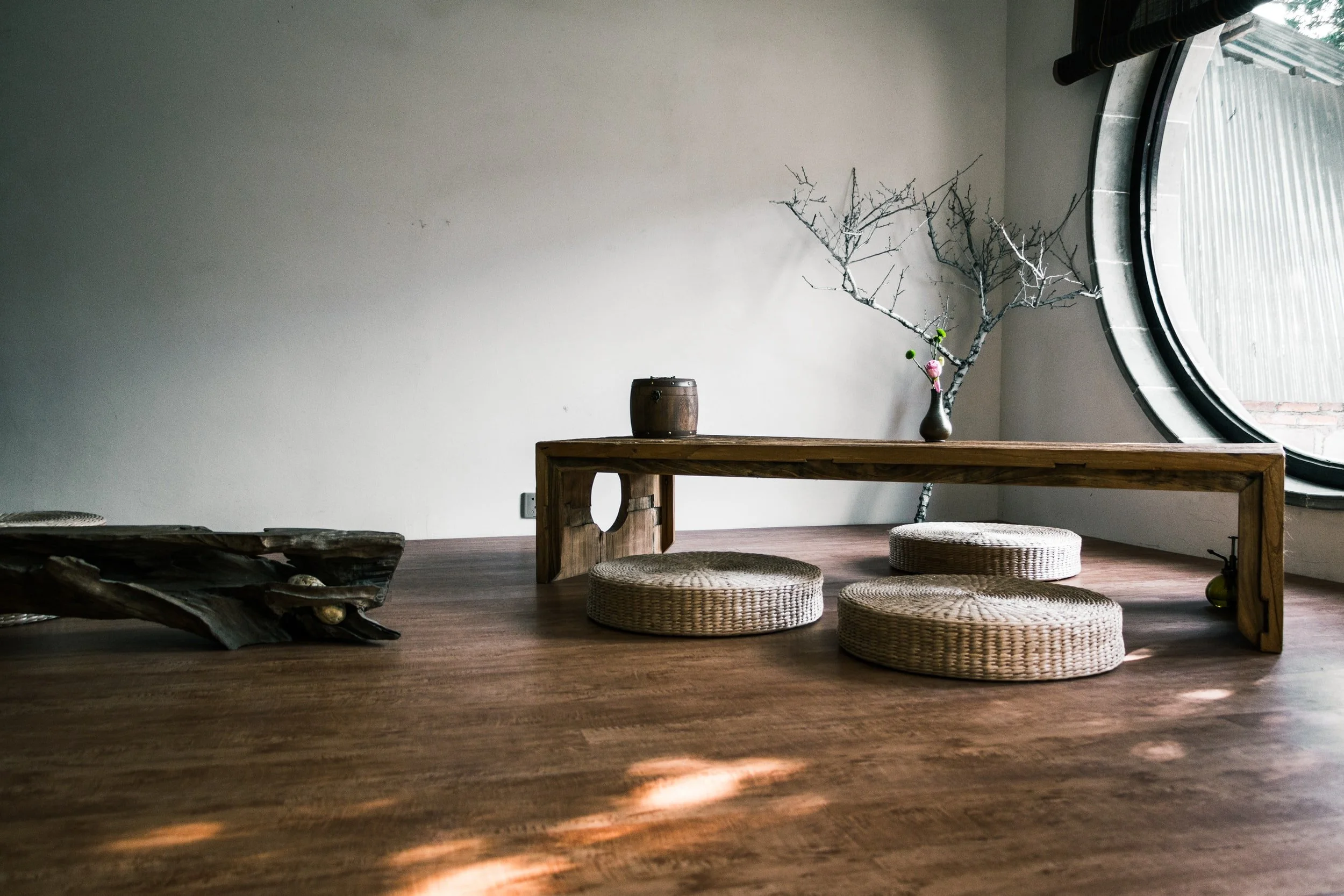
Interior space with the elements of Biophilic Design.
Hello and a warm welcome to Well-Designed, a blog about interior design that supports well-being, health, and joyful living!
The subject of well-being has been explored from many different angles for centuries. With different lifestyle and environmental trends coming and going, the spotlight has finally landed on the built environment where we spend the majority of our time. Don’t just take it from me - according to the EPA (United States Environmental Protection Agency), Americans spend nearly 90 percent of their time indoors. That is a lot, my friend! Besides the point that we all should get out more and smell the roses, it is important to give proper attention to the spaces we live, learn, work, and play in, because they have a massive impact on our physical and emotional well-being.
We intuitively feel more energized and uplifted in rooms drenched in day light, serene and calm when surrounded by natural materials and live plants, or invigorated when exposed to warm colors and even certain scents (think about peeling a sweet and zesty orange). This is not a coincidence. As humans we are wired to respond in a certain way to different environmental stimuli like light, sound, color, smell, and texture. Even though every single person was shaped by unique experiences to develop their own preferences and associations, there are still general physiological and psychological patterns of how individuals react to what surrounds them. To date scientific research has accumulated a wealth of knowledge that helps designers make educated decisions when creating spaces that support health, well-being, and daily functions of their users. To avoid getting technical and boring - interior designers now have a lot of evidential data in their arsenal to be able to put together a room that makes you feel and behave in a certain way. Amazing, right? #science
Some of the areas of research and design concepts that provide a valuable insight into the influence of the built environment on human well-being and behavior are: space planning, light studies, color, biophilic design, anthropometrics and ergonomic design, universal design, and indoor air quality to name a few. Every one of these categories is rather broad and deserves its own spotlight, but in this post I will go over the most important ones briefly to give you an idea about the role they play in designing spaces that make you feel good.
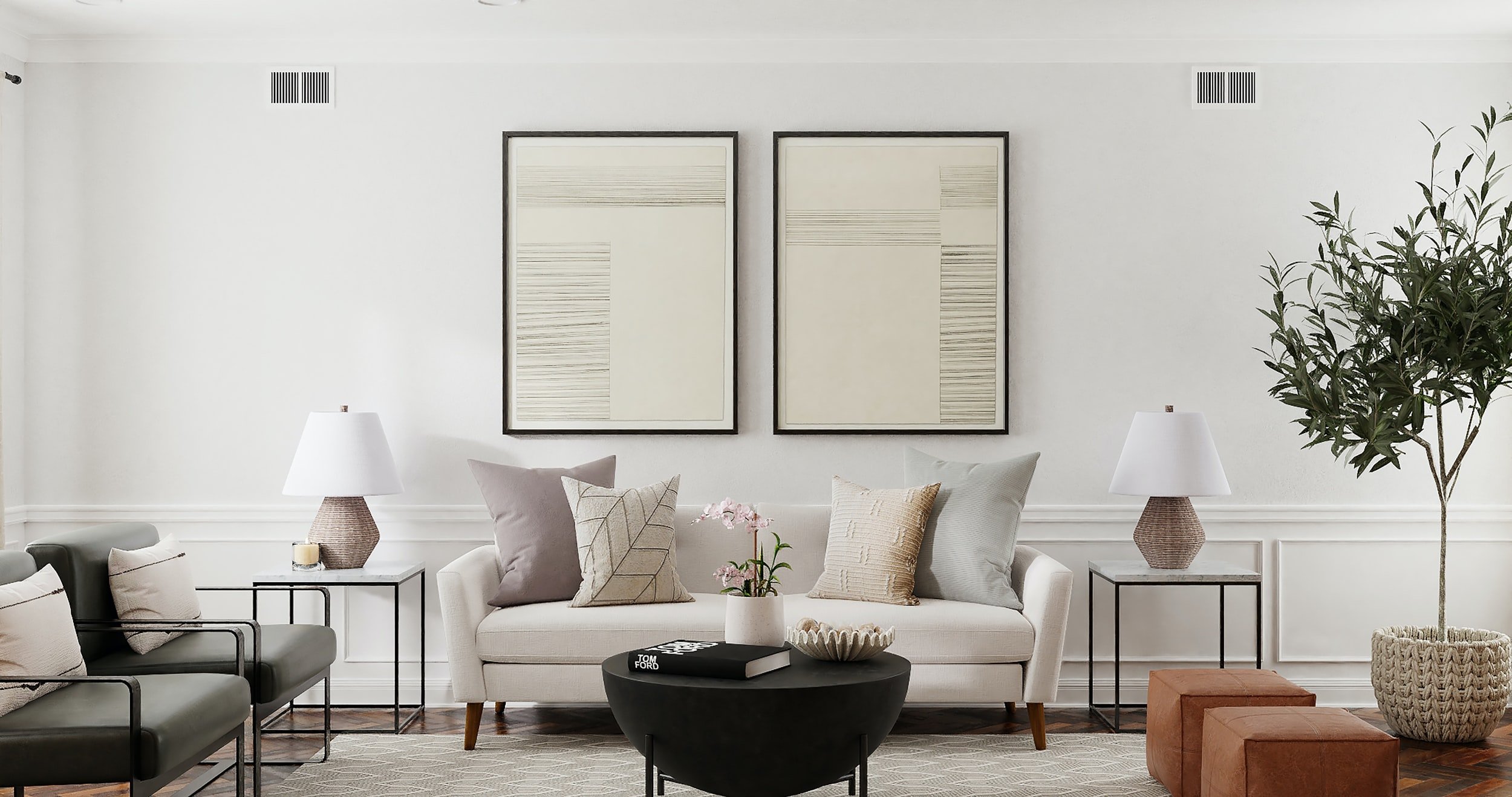
Space Planning (Layout)
Space planning is commonly known as “layout”. It is crucial for comfort, usability, and natural human interaction. A layout is created based on a general purpose of a space and the way we intend to use it. When I start a new project I first create a layout as a foundation for developing a successful design. In my opinion layout can make or break a space. A good layout creates a seamless flow through the space in which everything makes sense in relation to one another. It can encourage or discourage certain behaviors, facilitate a routine, and foster privacy or togetherness by strategically arranging furnishings and creating dedicated zones. Thoughtful space planning can make a room feel formal or casual; open or intimate, social or privacy centered.
Light
Light is a key factor in supporting well-being. It plays an important role for human health and safety, helps control mood and hunger, provides visibility to promote comfort, and creates an ambiance. It is human nature to seek daylight and perform with higher efficiency in bright artificial lighting. Dim lighting, on the other hand, creates an intimate and relaxing atmosphere that is desired for certain settings and is perfect for spaces where you unwind at the end of a day. Light also helps regulate mood and circadian rhythms, - a pattern of sleeping and waking hours. Some mood disorders and physiological conditions such as Seasonal Affective Disorder (SAD), depression, calcium deficiency, and even cancer are known to benefit from light therapy.
Color
In simple terms, color is light. Now that I wrote it, it does sound confusing. Let’s backtrack: color is not a physical part of an object - surfaces reflect or emit light of different wavelengths which human eye interprets as color. There. The signals that the eyes send to the brain when we see color affect us on emotional, mental, and even physical levels (red color was found to raise heart rate and blood pressure). A person’s reaction to color also depends on life experiences and cultural references. I will dive more into color psychology in my in-depth post about power of color in interior design.
Besides generating various human responses, color is also a powerful design tool when it comes to visually defining areas; creating contrast between surfaces to aid in safety when, for example, signaling floor level changes for elderly or people with impaired vision; and guiding movement throughout the space (which is often supplemented by lighting).
Biophilic Design
The term “biophilia” was coined by an American sociobiologist and naturalist Edward O. Wilson who believed in the innate human need to seek connection with nature and other living beings. And so, biophilic design is a research-based approach to interior design that integrated elements and references of nature into the built environment. And there is much more to it than adding a potted plant in a corner of the room. This can be done by incorporating natural materials, views and images of nature, increasing day light in a space, or bringing in the sounds and smells from nature. Studies show that interior spaces with connection to nature can help us decompress, relax, be more productive, and even heal faster!
Anthropometrics, Ergonomics & Universal Design
Please bare with me here, I promise not to play Bill Nye the Science Guy (no offense, Bill). I bunched up these three terms together because they all deal with human body dimensions and proportions in relation to the built environment and objects they utilize. It is a “good fit poor fit” category. Anthropometrics studies the measurements of the human body in context of the surrounding environment. It tells us a comfortable seat depth for a chair and how high to mount a light switch on the wall. Ergonomics utilizes anthropometric data to design user-friendly and safe products and spaces. And Universal Design focuses on making built environment equally accessible to people of different sizes and abilities.
Indoor Air Quality and Allergens
This post is getting pretty long, and there is still so much more to talk about! But a discussion about well-being in built environment wouldn’t be complete without mentioning indoor air quality - a relative measure of health and comfort of the occupants in a building. Materials used in building construction, furniture making, and production of textiles often contain chemicals that may be harmful to human health. Paints, varnishes, adhesives, flame retardants, and stain resistant coatings contain VOCs (volatile organic compounds) that emit toxic gasses into the air. Some construction materials are treated with toxic pesticides to repel termites. VOCs can trigger allergic reactions and chemical sensitivities which, in some cases, were found to develop into chronic conditions. Shell we rethink that particle board coffee table with an attractive price tag? Even though it may be practically impossible to avoid all of the harmful chemicals, with some research and carefully planning an interior designer can help choose materials and finishes with a lower VOC content, or use them in the way that contains the chemicals so they are not released into the environment. And lastly, proper material selection and application can help control common indoor allergens such as dust mites (sorry, wall-to-wall carpet).
Are you convinced yet that your surroundings are as important for your well-being as adequate sleep, balanced diet, and exercise? If not, here’s my closing argument: well designed spaces not only directly support physical and emotional wellbeing by harnessing research findings about human instincts and psychological responses, but also indirectly influence your sleep and activity patterns, as well as eating and exercise habits to name a few [Mic drop].
I will be diving deeper into the above design concepts and other design-related topics in the future posts. To receive new blog posts and updates straight to your inbox, subscribe to our monthly News Letter below. Let’s keep the conversation about interior design for well-being going!